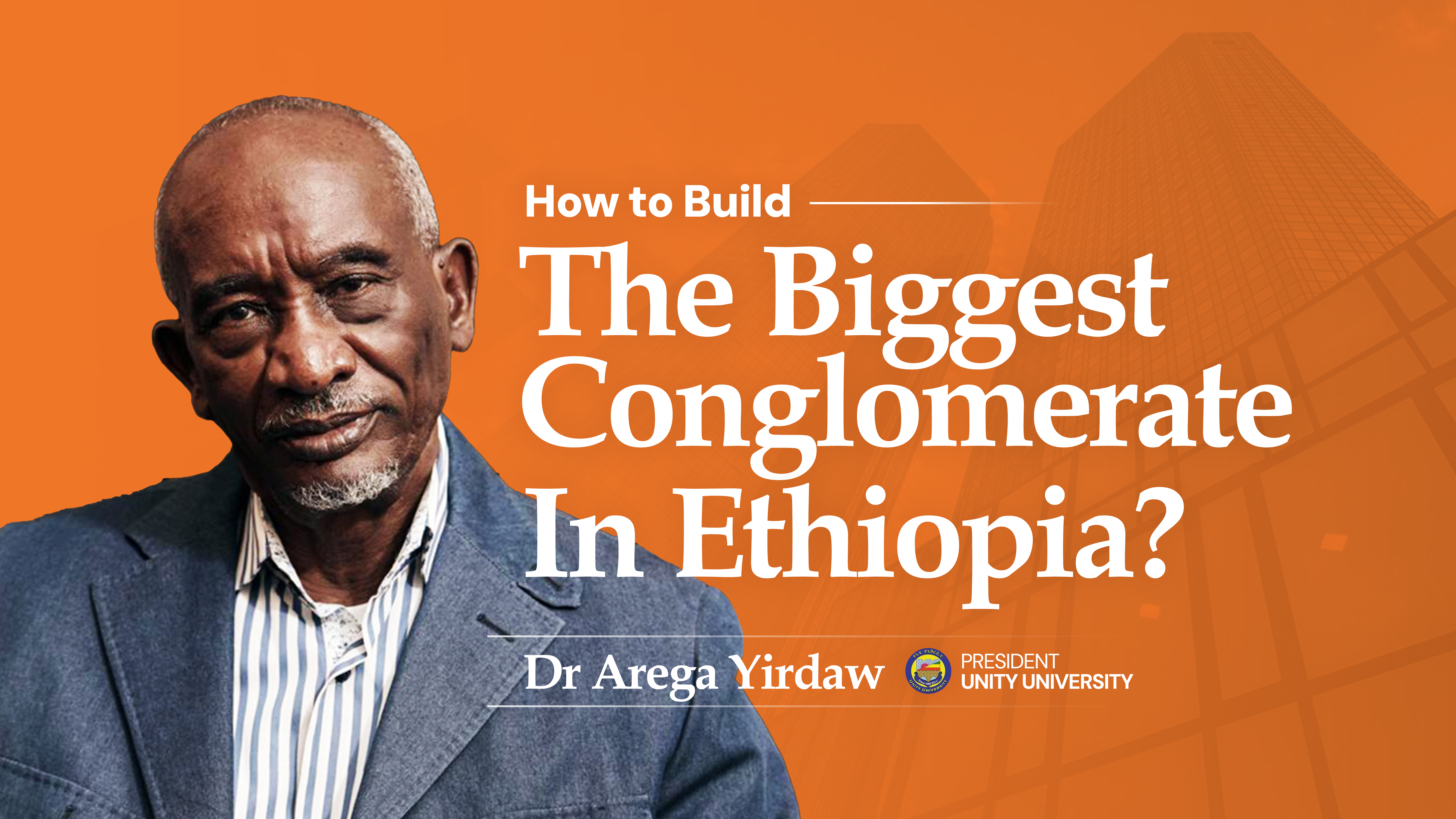
How to Build the Biggest Conglomerate In Ethiopia? The Remarkable Legacy of Dr. Arega Yirdaw
Meri Podcast had the honor to sit down with the former top Midroc Technology Group executive, Dr. Arega Yirdaw, during the first two episodes of season 10.
About Dr. Arega Yirdaw
Dr. Arega Yirdaw is a distinguished Ethiopian business leader and author, renowned for his nearly two decades as CEO of the Midroc Technology Group, a prominent group with 26 diverse companies. After earning an engineering degree from Addis Ababa University and working at Ethiopian Airlines, he spent 20 years in the United States, where he earned a Ph.D in Mechanical and Aeronautical Engineering. Returning to Ethiopia in 1999 at Sheik Muhamad’s request, he led Midroc's significant expansion. Now serving as the President of Unity University, he leverages his extensive experience to train emerging leaders, embodying his commitment to developing local talent and contributing to Ethiopia's growth. His book, Managing Organizational Structure: Practical Design and Application, captures his knowledge and insights, offering valuable resources to aspiring and established professionals alike.
During his interview, Dr. Arega shared how he was able to transform Midroc from a struggling group of five companies to a thriving conglomerate of 26 companies. Managing a diversified company requires a multifaceted approach. This article examines key management techniques and principles through the lens of Dr. Arega's leadership at Midroc.
1. Strategic Portfolio Management
Dr. Arega's approach to managing Midroc's diverse portfolio of 26 companies reflects a keen understanding of balancing risk and reward. He diversified across various sectors, from manufacturing (Wanza, Albright, Elfora) to mining (Midroc Gold) and education (Unity University). His strategy involved revitalizing struggling companies like Wanza and Albright by identifying new market opportunities, such as converting Albright from lightbulb manufacturing to glass production. At the time, Albright was struggling to penetrate a market filled with cheap Asian lightbulbs and Wanza had lost its appeal. This diversification and adaptability demonstrate a portfolio approach aimed at reducing sector-specific risks and increasing local autonomy. Albright was converted into the Moha Bottling group and the Addis Gas and Plastics expanded from making plastic crates to water bottles.
His proactive approach to addressing challenges, such as navigating the 18-month shutdown of Midroc Gold due to regulatory hurdles, demonstrates effective risk management. His commitment to retaining skilled employees during this period further, despite high salary costs, protected the company's long-term viability and demonstrated his commitment to human capital.
2. Decentralized Decision-Making
While Dr. Arega maintains a hands-on approach, his management philosophy emphasizes empowering managers. As the number of companies was increasing, Dr. Arega had to review Midroc’s structure. He assigned General Managers per sector, overseen by a CEO, himself, fostering decentralized decision-making. His mantra, "Managers should manage options, not excuses," encourages initiative and problem-solving at the unit level. This structure allows for agility to market changes, and improved follow-up.
3. Resource Allocation and Capital Discipline
Dr. Arega's strategic investments demonstrate effective resource allocation. He prioritized revitalizing existing businesses, like Wanza, and strategically expanding others, such as adding a bottle cap manufacturing line to complement Albright's glass production. Further, he created a Home Depot-style store concept that would allow customers to shop simultaneously for construction materials, food items, banking services, and more, maximizing the market penetration. This long-term perspective prioritizes strategic alignment over short-term cost-cutting.
Additionally, to streamline operations across 26 companies without a formal holding company structure, Dr. Arega created a separate management company providing shared services (HR, finance, auditing, corporate social responsibility, etc.) for a fee. This innovative approach reduces redundancy and promotes consistency while allowing each business unit to maintain operational independence. It also facilitates standardized reporting and performance reviews, further enhancing efficiency.
4. Regular Performance Review and Adaptation
A structured reporting system, including weekly reports, monthly executive meetings, and annual appraisals with general managers, ensures regular performance reviews. This data-driven approach allows for continuous evaluation and adaptation. The positive competition fostered among general managers further incentivizes performance improvements and strategic alignment.
5. Talent Management and Leadership Development
Before joining Midroc, Dr. Arega had been tutoring and teaching part-time, which continued into his role as a mentor, and then as an author. He believes that future managers and leaders of Ethiopia can grow better if he shares the lessons learned from his time as a leader. This belief in continuous learning extends into his approach with his staff members. He emphasizes employee training, a positive work environment, and retention over dismissal. His focus on developing internal talent and promoting from within ensures leadership continuity and a strong organizational culture.
6. Dr. Arega’s Personal Philosophies
Dr. Arega’s philosophies demonstrate that he is a leader with a strong sense of self and a duty to his community. To be successful, he believes that each person has to think differently and define themselves by navigating through their strengths and weaknesses to achieve personal growth and support their community.
Finally, his leadership is supported by ethical conduct with a clear separation between personal interest and company longevity. A manager/leader should pursue a long-term strategy for his company rather than seeking short-term gains. Whether it is the strategies he’s implemented, the company culture he’s created, or his focus on creating a solutions-driven environment, Dr. Arega has created a solid structure for Midroc.
Dr. Arega's leadership at Midroc provides an engaging case study of effective management in a diversified company. His strategic approach, combined with a strong focus on people and continuous improvement, has enabled him to navigate complex challenges and build a successful and sustainable organization.
Recent Articles
The Power of Persistence Bemnet…How to Build the Biggest…
Beyond the Blueprint Rahel's Vision…
Driving a Sustainable Dairy Farming…
The Impact of Currency Floating…
Pioneering the Ethiopian Private Medical…
The Entrepreneurial Journey That Led…
Meri Summit on Building High-Performing…
Turning Eventing Passion into Profit…
Becoming an Accidental Entrepreneur Meried…
Navigate the Newly Emerging Ethiopian…
Becoming a Global Chef Celebrity…
Turning Plastic Waste into Affordable…
Becoming a Creative Master The…